Showing posts with label jan lokpal bill. Show all posts

Thursday, August 25, 2011

What is the Jan Lokpal Bill, why it's important


The Jan Lokpal Bill (Citizen's ombudsman Bill) is a draft anti-corruption bill drawn up by prominent civil society activists seeking the appointment of a Jan Lokpal, an independent body that would investigate corruption cases, complete the investigation within a year and envisages trial in the case getting over in the next one year. 

Drafted by Justice Santosh Hegde (former Supreme Court Judge and former Lokayukta of Karnataka), Prashant Bhushan (Supreme Court Lawyer) and Arvind Kejriwal (RTI activist), the draft Bill envisages a system where a corrupt person found guilty would go to jail within two years of the complaint being made and his ill-gotten wealth being confiscated. It also seeks power to the Jan Lokpal to prosecute politicians and bureaucrats without government permission. 

Retired IPS officer Kiran Bedi and other known people like Swami Agnivesh, Sri Sri Ravi Shankar, Anna Hazare and Mallika Sarabhai are also part of the movement, called India Against Corruption. Its website describes the movement as "an expression of collective anger of people of India against corruption. We have all come together to force/request/persuade/pressurize the Government to enact the Jan Lokpal Bill. We feel that if this Bill were enacted it would create an effective deterrence against corruption."

Anna Hazare, anti-corruption crusader, went on a fast-unto-death in April, demanding that this Bill, drafted by the civil society, be adopted. Four days into his fast, the government agreed to set up a joint committee with an equal number of members from the government and civil society side to draft the Lokpal Bill together. The two sides met several times but could not agree on fundamental elements like including the PM under the purview of the Lokpal. Eventually, both sides drafted their own version of the Bill.

The government has introduced its version in Parliament in this session. Team Anna is up in arms and calls the government version the "Joke Pal Bill." Anna Hazare declared that he would begin another fast in Delhi on August 16. Hours before he was to begin his hunger strike, the Delhi Police detained and later arrested him. There are widespread protests all over the country against his arrest.         

The website of the India Against Corruption movement calls the Lokpal Bill of the government an "eyewash" and has on it a critique of that government Bill. 

A look at the salient features of Jan Lokpal Bill:
1. An institution called LOKPAL at the centre and LOKAYUKTA in each state will be set up

2. Like Supreme Court and Election Commission, they will be completely independent of the governments. No minister or bureaucrat will be able to influence their investigations.

3. Cases against corrupt people will not linger on for years anymore: Investigations in any case will have to be completed in one year. Trial should be completed in next one year so that the corrupt politician, officer or judge is sent to jail within two years.

4. The loss that a corrupt person caused to the government will be recovered at the time of conviction.

5. How will it help a common citizen: If any work of any citizen is not done in prescribed time in any government office, Lokpal will impose financial penalty on guilty officers, which will be given as compensation to the complainant.

6. So, you could approach Lokpal if your ration card or passport or voter card is not being made or if police is not registering your case or any other work is not being done in prescribed time. Lokpal will have to get it done in a month's time. You could also report any case of corruption to Lokpal like ration being siphoned off, poor quality roads been constructed or panchayat funds being siphoned off. Lokpal will have to complete its investigations in a year, trial will be over in next one year and the guilty will go to jail within two years.

7. But won't the government appoint corrupt and weak people as Lokpal members? That won't be possible because its members will be selected by judges, citizens and constitutional authorities and not by politicians, through a completely transparent and participatory process.

8. What if some officer in Lokpal becomes corrupt? The entire functioning of Lokpal/ Lokayukta will be completely transparent. Any complaint against any officer of Lokpal shall be investigated and the officer dismissed within two months.

9. What will happen to existing anti-corruption agencies? CVC, departmental vigilance and anti-corruption branch of CBI will be merged into Lokpal. Lokpal will have complete powers and machinery to independently investigate and prosecute any officer, judge or politician.

10. It will be the duty of the Lokpal to provide protection to those who are being victimized for raising their voice against corruption.
Read more ...

Jan Lokpal Bill: We are victims of Congress politics, says Arvind Kejriwal

NEW DELHI: Team Anna is a "victim of Congress politics", said activist Arvind Kejriwal Thursday, a day after talks between the government and activist Anna Hazare's group ended in a deadlock.
"We have become victims of internal politics of Congress. How many rounds of talks we have had with senior leaders like Kapil Sibal and Chidambaram but nothing has happened till now. Whom will we talk to?" Kejriwal said, even as Hazare's fast entered its tenth day Thursday.
There was no breakthrough Wednesday night in the talks between the government and Hazare's team for an anti-corruption law.
"There were strong indications that Annaji could be evicted from Ramlila Maidan early morning today (Thursday). As the issue was publicised nothing was done," Kejriwal told reporters here.
Hazare has been on fast since Aug 16, the day he was arrested and taken to Tihar Jail. He was released the same day, but he refused to leave. He shifted to Ramlila ground Aug 19 where he has been continuing with his fast.

Read more ...

Wednesday, August 24, 2011

Anna Hazare - Anti-Corruption Movement

Power Situation during 1985-86 became extremely critical. The farmers were unable to lift water from the wells inspite of its availability due to insufficient voltage to run pumps. The motors were getting burnt due to fluctuations and the crops were getting affected. There was scant response from the govt. inspite of continuous follow-up. On 28th Nov. 1989 Mr. Hazare was forced to undertake fast for seeking redressal. After 8 days of his fast , his health deteriorated and was admitted in the civil hospital at Ahmednagar. As there was, no response inspite of action from his side, the farmers from three tehsils became furious and they started road block agitation. Fearing that if the agitation takes a wrong turn, something untoward may take place. He appealed to the agitators from the hospital bed that they should not resort to unfair means, damage the national property and inflict any harm to the passengers. The agitation should be peaceful. The police authorities did not expect huge participation and there was meager police force available.


However, they were proved wrong and more than 10000 men and 1200 women participated in the agitation. The agitators had offered police to take them to jail. However, since enough transport was not available with the police, the police tried to remove the road block. Due to improper treatment meted out to the agitators, there was scuffle between police and the agitators and the police resorted to lathi-charged on agitators. This action on the part of police irritated them and they pelted stones on the police force. Since the situation was going out of control, additional force was called and police opened fire on the agitators in which 4 farmers died on the spot and 7 farmers sustained severe injuries. He felt sad on hearing this news in the hospital. The agitation was meant for awakening the government and there is no harm in carrying out such agitations in democracy. He had decided to end his life during the fast itself, but Senior Officials of the government and even Ministers persuaded him to give up his fast as they feared that if agitation continues, lot many farmers may lose their life and in order to save the life of innocent farmers, he withdrew his fast.


Model Village as contemplated by Gandhiji was brought in reality by Shri Annaji at Ralegan Siddhi by his dedication. “Late Shri Achyutrao Patwardhan, the great freedom fighter, suggested to the government of Maharashtra that to commemorate the golden jubilee of Bharat Chhodo Andolan, it would be most befitting to create model villages like Ralegan Siddhi in every tehsil of the state. The government accepted this suggestion and declared to implement “Adarsh Gaon Yojana”. The Government entrusted this responsibility to him and Adarsha Gaon Yojana was started under his leadership . He travelled whole of Maharashtra and selected 300 villages to implement this scheme. While working in this scheme

he realised that development is getting hampered due to planned corruption in Govermnent machinery and he decided to fight against this corruption. He gave evidence against two ministers who had amassed wealth disproportionate to their income. However since the Govt was passive about this he started agitation and undertook fast for l0 days. Chief Minister intervened and he deleted these two ministers from ministry and appointed an Inquiry Commission. The Commission held both the ministers guilty but to save them the Govt appointed another commission who discharged them from the allegations. Though the ministers were discharged from the allegations, they had to loose their ministership which is the success of Mr.Hazare's agitation.


Mr.Hazare's gave evidence of corruption by Social Welfare Minister to the then Chief Minister. On 3lst July l999 the Chief Minister informed him that inquiry is being instituted about the charges leveled by him. He had given an interview to a local daily regarding this inquiry and based on this interview the concerned minister had filed a case in the court against Mr.Hazare for defamation. He was held guilty by the Court and the court had asked him to give an undertaking that he will not make such allegations in future.He refused to give such undertaking and preferred to go jail for 3 months as ordered by the court. He told the court that He was willing to give his life for truth. His punishment created commotion in public and scores of people started visiting Yerawada Jail.


He wanted to compelte his jail term but to give respect to the public feelings he accepted his release.In l992 Gandhji had told the court that if court feels that his actions for the freedom of the country are considered as anti government activities he was willing to undergo any punishment .Similarly he did not give bond to the court and accpeted punishment. He did not prefer any appeal against the court order immediately but due to public pressure he later made an appeal which was upheld by the Higher Court and rejected the suit of minister.Mr. Hazare asked the Govt. to conduct the inquiry against the minister which is still on.


In the regim of coaliation Government of Congress and National Congress Party, He had forwarded evidence of corruption about 4 ministers and had asked the Government to conduct inquiry. One of the ministers had made allegations about corruption in the institutions in which he was associated. Since there was no action from the Govt. he undertook fast for 9 dys in August 2003 at Azad Maidan. The minister concenred also started agitation at Azaj Maidan in Mumbai. At last the Government relented and Retired Suprement Court Judge Shri P.B. Sawant was appointed to conduct the inquiry. The commission conducted the inquiry and sent its report to Govt. on 22nd Februrary .

In the report the commission had observed ministers guilty and had held Mr.Hazare also guilty forirregularities but not a single charge of corruption was proved against him.Mr. Hazare has offered the Government that it should take action against him as well as the ministers based on the findings of the enquiry comissions.Though Govt has not taken any action on the Commission's report three ministers had to go and this is a big achievement of his agitation against corruption.


He felt that corruption will not stop merely by taking action against a few officers and ministers and it is necessary that a change should be brought about in the system, He believes that unless decentralisation of power takes place the system will not change.In order to bring change in the system he felt that information should be made available to people regarding Govt.'s actions which was not being provided to people on the ground of secracy. Here again he decided to follow Gandhiji's path and started Maun Vrat and later fast unto death. This brought pressure on the Govt. and both the Central as well as State Governments have enacted Right to Information Act. His whole life and work is based on Gandhian philosophy.


Prohibition


Alcohol has ruined many families in rural India. The existing laws did not have teeth to ban the sale of alcohol in villages. So he decided to press the government to make a law for prohibition if 50% women demanded for it. Ultimately, women are the most affected lot if their husbands are drunkards.


By the new Act, the women of any village can collectively demand for ban on sale of alcoholic drinks in the village. If a minimum of 50% of women complain to the District Collector about their sufferings and request for total prohibition in the village, the Collector can hold ballot paper election in the village. There will be two signs on the paper – one being a bottle in standing position and another being in a horizontal position. The women will cast their votes. In the evening, the votes will be counted. If more votes are in favour of ‘horizontal bottle’, then the Collector will ban the sale of alcoholic drinks in the village and cancel the license of the seller.


In many villages, the licenses have been cancelled and total prohibition came into reality after this Act. In some villages, the alcohol sellers have manipulated the election with money power.


Anyhow, this Act has supported and strengthened the women. Women have become empowered due to this act and became fearless to come in open against the alcoholism. This Act has helped in organizing the women and fight against evils for a common good. Women’s empowerment is the need of the day.

Read more ...

Tuesday, August 23, 2011

Anna wants to meet responsible people: Arvind Kejriwal

New Delhi: As anti-corruption activist Anna Hazare's fast enters its eighth day, Arvind Kejriwal on Tuesday said they want political dialogues since this is a political problem.

Kejriwal also announced that nobody has met Team Anna officially yet. " No body has come to us officially yet. Anyone who has come to meet us has come unofficially," said Kejriwal.

He also urged Anna's supporters to remain peaceful while they continue to protest. Pointing out that they are against corruption, he said, "I appeal to people to be peaceful."

Addressing media people at Ramlila Maidan on Tuesday, Kejriwal said, "We should not be targetting individual leaders or party."

Kejriwal, Anna's close aide, also said the negotiations should be formal and they do not want to speak to informal negotiators. He said, "Anna wants to meet responsible people."

Mentioning all the people who have come to meet the 74-year-old Gandhian are friends, Kejriwal clarified, "People have not come to meet Anna with mandate. But they have come to meet him as they know him for long."

Addressing thousands of supporters at Ramlila Maidan, Kejriwal said, "I request people to sit in front of the residences of their elected representatives and discuss with them."

He also asked the people to who are sitting on fast to come out of fast as Anna Hazare is already sitting on fast.

Read more ...

Govt likely to decide on Jan Lokpal Bill today

New Delhi: As Anna Hazare's fast enters the eighth day on Tuesday, a worried Government is likely to take a decision on placing the Jan Lokpal Bill before the Parliamentary Standing Committee. With no quick-fix formula in hand, the Government is weighing over various options.

Under pressure, the Congress Party's main troubleshooters Pranab Mukherjee, P Chidambaram and Ahmed Patel held a meeting at the Prime Minister's residence on Monday to discuss the party's strategy on the issue.

Sources tell CNN-IBN that the Government is thinking of placing the Jan Lokpal Bill as a corrigendum in Parliament.

Sources also say that there is no plan to withdraw the Government's version of the Lokpal Bill and that the Government will take the final decision on Tuesday.

Sources say that the Government is also considering bringing the Prime Minister under the purview of the Lokpal.

Sources also said that the Government is exploring the option of getting the Opposition to support the idea that Anna Hazare cannot be allowed to bypass Parliament.

The Government is contemplating the option of requesting the Standing Committee to ensure that its proceedings are completed within two months, said the sources.

The Government's next option, say sources, is calling a special session of Parliament if needs be.

The Government may consider appointing political negotiators to directly talk to Team Anna as Anna Hazare has said he doesn't want to talk to non-political negotiators, but someone from the PMO or Rahul Gandhi.

Meanwhile, Team Anna on Tuesday reiterated that they are ready for direct talks.

"A solution can be found through dialogue and not through media," said Arvind Kejriwal.

"There are two options before the Government - either introduce the Jan Lokpal Bill or amend their version of the Bill," he said.

Read more ...

Anna's health deteriorates; how long can he fast?

New Delhi: Day eight into his fast, Anna Hazare has lost five kilograms. His weight is down from 72 to 67 kilograms. His blood pressure is at 130/90 and the heart rate is slightly high at 90.

A team of government doctors and another team from the Medanta Hospital are constantly monitoring his health. The question on everyone's mind - just how long can Anna continue?

When he came to the Ramlila grounds five days ago, one of the first few things he said was that although he had lost weight and was feeling weak since he started this fast, he was getting energy from seeing his supporters.

It may have sounded very encouraging back then, but how far can Anna ignore his health concerns? At 74, his doctors, at least, are worried for him and are not sure, if he can continue much more.

Here's what can happen to Anna:

Acute dehydration causing a drop in the sodium and fluoride levels in the body - could lead to kidney damage, low heart rate, even precipitate a heart attack.

Electrolyte imbalance that could lead to neurological complications like unconsciousness, convulsions, even stroke.

Metabolic problems. Drop in blood sugar levels leading to unconsciousness, convulsions, kidney failure, multiple organ failure, even death.

Doctors say in two-three days Anna would need medical intervention.

According to the Delhi Police, they will now wait to see what government doctors say. If they say Anna needs urgent medical intervention and needs to be hospitalised, the Delhi Police can intervene and forcibly remove him, if Anna refuses to budge.

Next, Anna maybe force fed through IV drips or orally.

But given the sensitivity of the situation - it is a call the Delhi Police cannot take alone. They will have to wait for a final nod from the government.

Read more ...

Saturday, August 20, 2011

10 differences between Jan Lokpal Bill and Govt Bill


The streets are witnessing a demand that the government's Lok Pal Bill be replaced by the Jan Lok Pal Bill (JLP) as drafted by the team led by Anna Hazare. There are several significant differences between the two bills. In this note, we describe the some of these differences.

First, there is a divergence on the jurisdiction of the Lok Pal. Both bills include ministers, MPs for any action outside Parliament, and Group A officers (and equivalent) of the government. The government Bill includes the Prime Minister after he demits office whereas the JLP includes a sitting Prime Minister. The JLP includes any act of an MP in respect of a speech or vote in Parliament (which is now protected by Article 105 of the Constitution). The JLP includes judges; the government Bill excludes them. The JLP includes all government officials, while the government Bill does not include junior (below Group A) officials. The government Bill also includes officers of NGOs who receive government funds or any funds from the public; JLP does not cover NGOs.

10 differences between Jan Lokpal Bill and Govt Bill

Second, the two Bills differ on the composition. The government Bill has a chairperson and up to 8 members; at least half the members must have a judicial background. The JLP has a chairperson and 10 members, of which 4 have a judicial background.

Third, the process of selecting the Lok Pal members is different. The JLP has a two stage process. A search committee will shortlist potential candidates. The search committee will have 10 members; five of these would have retired as Chief Justice of India, Chief Election Commissioner or Comptroller and Auditor General; they will select the other five from civil society. The Lok Pal chairperson and members will be selected from this shortlist by a selection committee. The selection committee consists of the Prime Minister, the Leader of Opposition in Lok Sabha, two Supreme Court judges, two high court chief justices, the Chief Election Commissioner, the Comptroller and Auditor General and all previous Lok Pal chairpersons.

The government Bill has a simpler process. The selection will be made by a committee consisting of the Prime Minister, the leaders of Opposition in both Houses of Parliament, a Supreme Court judge, a high court chief justice, an eminent jurist and an eminent person in public life. The selection committee may, at its discretion, appoint a search committee to shortlist candidates.

Fourth, there are some differences in the qualifications of a member of the Lok Pal. The JLP requires a judicial member to have held judicial office for 10 years or been a high court or Supreme Court advocate for 15 years. The government Bill requires the judicial member to be a Supreme Court judge or a high court chief justice. For other members, the government Bill requires at least 25 years experience in anti-corruption policy, public administration, vigilance or finance. The JLP has a lower age limit of 45 years, and disqualifies anyone who has been in government service in the previous two years.

Fifth, the process for removal of Lok Pal members is different. The government Bill permits the president to make a reference to the Supreme Court for an inquiry, followed by removal if the member is found to be biased or corrupt. The reference may be made by the president (a) on his own, (a) on a petition signed by 100 MPs or (c) on a petition by a citizen if the President is then satisfied that it should be referred. The President may also remove any member for insolvency, infirmity of mind or body, or engaging in paid employment.

The JLP has a different process. The process starts with a complaint by any person to the Supreme Court. If the court finds misbehaviour, infirmity of mind or body, insolvency or paid employment, it may recommend his removal to the President.

Sixth, the offences covered by the bills vary. The government Bill deals only with offences under the Prevention of Corruption Act. The JLP, in addition, includes offences by public servants under the Indian Penal Code, victimization of whistleblowers and repeated violation of citizen's charter.

Seventh, the government Bill provides for an investigation wing under the Lok Pal. The JLP states that the CBI will be under the Lok Pal while investigating corruption cases.

Eighth, the government Bill provides for a prosecution wing of the Lok Pal. In the JLP, the CBI's prosecution wing will conduct this function.

Ninth, the process for prosecution is different. In the government Bill, the Lok Pal may initiate prosecution in a special court. A copy of the report is to be sent to the competent authority. No prior sanction is required. In the JLP, prosecution of the Prime Minister, ministers, MPs and judges of Supreme Court and high courts may be initiated only with the permission of a 7-judge bench of the Lok Pal.

Tenth, the JLP deals with grievance redressal of citizens, in addition to the process for prosecuting corruption cases. It requires every public authority to publish citizen's charters listing its commitments to citizens. The government Bill does not deal with grievance redressal.

Given the widespread media coverage and public discussions, it is important that citizens understand the differences and nuances. This may be a good opportunity to enact a law which includes the better provisions of each of these two bills.

Read more ...

Thursday, August 18, 2011

Jan Lokpal Bill: Support swells for Anna Hazare in Chennai

CHENNAI: Support for veteran Gandhian Anna Hazare's demand for a strong anti-corruption bill swelled here Wednesday with a large number of people from varied walks of life pledging support.

"Around 5,000 people visited the protest venue today (Wednesday) till 4 p.m. More office-goers are expected after the office hours," Bhavana Upadhyaya of India Against Corruption (IAC), the outfit backing Hazare, told IANS.

The IAC is holding protests at a construction site and people are fasting inside the multi-storied building.

Bhavana said that out of the 36 people on indefinite fast, a 55-year-old was hospitalised while the number of people on relay fast has increased to 100.

According to Upadhyaya, 30 students were arrested here for shouting slogans in support of Jan Lokpal-the civil society's draft of the anti-corruption bill.

Actor-turned-politician Sharath Kumar visited the protest venue and expressed his solidarity with those fasting. Youth power was visible at the venue with large number of students present at the site.

"We are supporting people who are fighting for the welfare of the country. The fight is against corruption that plagues the nation," R. Dhanya, a student of architecture, told IANS.

Priya Malolan, a housewife who had come with her child at the venue, said: "The nation has to be saved and we are here to lend our support to the noble cause."

E. Sridhar, a banker, said: "The people who come here are commoners like you and me. They are not part of any political party. Now it is the right time to strike so that the nation gets a good anti-corruption law."

Around 1,500 students and faculty members of Srimathi Sundaravalli Memorial School in Chrompet here also took out a procession.

Meanwhile, around 25 college students hailing from Bihar and Jharkhand, travelling in a goods-carrying vehicle towards the protest venue, had a brush with policemen.

"Seeing the ruckus created by the students the police intercepted the vehicle and brought the students here," said a police official at the Kotturpuram station.

The students then got in touch with IAC officials who in turn approached top police officers to help the students. On the intervention of police higher ups, the students were let off.

The students said the police had asked them to pay a fine. "The students were not able to speak properly in English or Tamil. We did not ask them to pay any fine. They were let off with an advice not to shout on the streets," a police officer told IANS.
Read more ...

Wednesday, August 17, 2011

What is the Jan Lokpal Bill, why Jan Lokpal Bill is important

Source: http://indiaagainstcorruption.org/

The Jan Lokpal Bill (Citizen's ombudsman Bill) is a draft anti-corruption bill drawn up by prominent civil society activists seeking the appointment of a Jan Lokpal, an independent body that would investigate corruption cases, complete the investigation within a year and envisages trial in the case getting over in the next one year.

Drafted by Justice Santosh Hegde (former Supreme Court Judge and former Lokayukta of Karnataka), Prashant Bhushan (Supreme Court Lawyer) and Arvind Kejriwal (RTI activist), the draft Bill envisages a system where a corrupt person found guilty would go to jail within two years of the complaint being made and his ill-gotten wealth being confiscated. It also seeks power to the Jan Lokpal to prosecute politicians and bureaucrats without government permission.
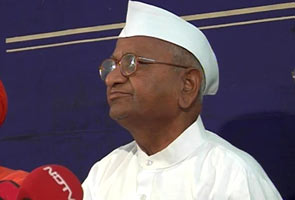
Retired IPS officer Kiran Bedi and other known people like Swami Agnivesh, Sri Sri Ravi Shankar, Anna Hazare and Mallika Sarabhai are also part of the movement, called India Against Corruption. Its website describes the movement as "an expression of collective anger of people of India against corruption. We have all come together to force/request/persuade/pressurize the Government to enact the Jan Lokpal Bill. We feel that if this Bill were enacted it would create an effective deterrence against corruption."

Anna Hazare, anti-corruption crusader, went on a fast-unto-death in April, demanding that this Bill, drafted by the civil society, be adopted. Four days into his fast, the government agreed to set up a joint committee with an equal number of members from the government and civil society side to draft the Lokpal Bill together. The two sides met several times but could not agree on fundamental elements like including the PM under the purview of the Lokpal. Eventually, both sides drafted their own version of the Bill.

The government has introduced its version in Parliament in this session. Team Anna is up in arms and calls the government version the "Joke Pal Bill." Anna Hazare declared that he would begin another fast in Delhi on August 16. Hours before he was to begin his hunger strike, the Delhi Police detained and later arrested him. There are widespread protests all over the country against his arrest.        

The website of the India Against Corruption movement calls the Lokpal Bill of the government an "eyewash" and has on it a critique of that government Bill.

A look at the salient features of Jan Lokpal Bill:

1. An institution called LOKPAL at the centre and LOKAYUKTA in each state will be set up

2. Like Supreme Court and Election Commission, they will be completely independent of the governments. No minister or bureaucrat will be able to influence their investigations.

3. Cases against corrupt people will not linger on for years anymore: Investigations in any case will have to be completed in one year. Trial should be completed in next one year so that the corrupt politician, officer or judge is sent to jail within two years.

4. The loss that a corrupt person caused to the government will be recovered at the time of conviction.

5. How will it help a common citizen: If any work of any citizen is not done in prescribed time in any government office, Lokpal will impose financial penalty on guilty officers, which will be given as compensation to the complainant.

6. So, you could approach Lokpal if your ration card or passport or voter card is not being made or if police is not registering your case or any other work is not being done in prescribed time. Lokpal will have to get it done in a month's time. You could also report any case of corruption to Lokpal like ration being siphoned off, poor quality roads been constructed or panchayat funds being siphoned off. Lokpal will have to complete its investigations in a year, trial will be over in next one year and the guilty will go to jail within two years.

7. But won't the government appoint corrupt and weak people as Lokpal members? That won't be possible because its members will be selected by judges, citizens and constitutional authorities and not by politicians, through a completely transparent and participatory process.

8. What if some officer in Lokpal becomes corrupt? The entire functioning of Lokpal/ Lokayukta will be completely transparent. Any complaint against any officer of Lokpal shall be investigated and the officer dismissed within two months.

9. What will happen to existing anti-corruption agencies? CVC, departmental vigilance and anti-corruption branch of CBI will be merged into Lokpal. Lokpal will have complete powers and machinery to independently investigate and prosecute any officer, judge or politician.

10. It will be the duty of the Lokpal to provide protection to those who are being victimized for raising their voice against corruption.

Read more ...

India against corruption: Pranab Mukherjee accuses opposition of not allowing govt. to put forth views

NEW DELHI: Accusing the Opposition of not allowing government to put forth its views in Parliament on Anna Hazare's detention, two senior ministers today said such an attitude was "not fair" in a parliamentary system.

Talking to reporters separately, Leader of the Lok Sabha and Finance Minister Pranab Mukherjee and Parliamentary Affairs Minister Pawan Kumar Bansal said opposition created a pandemonium in Parliament forcing its adjournment.

"Now a days, unfortunately, we are noticing that some of the opposition leaders are making their observations on a particular discussion and thereafter, when the questions are replied by the government, they are creating pandemonium and force an adjournment of the House. This is not fair in parliamentary practice," Mukherjee said.

His views were echoed by Bansal, who said it was an "old habit" of the Opposition of not allowing government to speak.

"They are making the system irrelevant," he said. Mukherjee said Bansal tried his best to impress upon the leaders of the opposition parties to let BJP leader Sushma Swaraj make her observation in the Question Hour and thereafter the Home Minister be allowed to make his observation.

"The Home Minister wanted to make the statement, we wanted to tell this country that it is legitimate right of every individual, group to have protest but at the same time there are certain rules, certain laws. If police considers that particular action may lead to law and order problem, police can impose certain conditions," he explained.

Mukherjee said while in a free country like India everybody had a right protest, there was a "method" to be adopted.

He said once police had imposed restrictions, it was for the parties concerned to decide in consultation with police and administration to take further action.

In reply to a question, Bansal said Congress members were not disrupting proceedings but were merely displaying copies of questions to be asked from government as they wanted the Question Hour to take place.

Congress MP Rashid Alvi accused Leader of Opposition in Lok Sabha Sushma Swaraj of "deciding" every morning whether or not to allow the House to run that day.

"This is very painful and unfortunate. The House should run, there should be debate inside the House. But the BJP's attitude is unconstitutional. They are not allowing both Lok Sabha and Rajya Sabha to function", Alvi said.

He also termed BJP member Rudra Narayan Pani's rushing to the Well in Rajya Sabha as "condemnable" and said the opposition was "not willing to apologise for it. This is condemnable".

Read more ...

India Against Corruption (IAC) now has an Android app!

India Against Corruption (IAC) now has an Android app and a Symbian app, to help spread awareness about the movement.

The Android app is a free download from the market and the downloads have surged in the past few days. The app was released on Aug 6, 2011 and was developed by Juvenis Tech (they don’t have any other apps in the app store). India Against Corruption (IAC), has previously released a Twitter app.

janlokpal India Against Corruption (IAC) now has an Android app!

IAC app runs on all Android devices running OS version of 1.6 or up. IAC app has latest news, streaming videos, polls, volunteer registration, latest about Lokpal and few other features. Looks like the app was developed in a record time and is also much needed to spread the word.

lokpal screenshots India Against Corruption (IAC) now has an Android app!

Lokpal Messenger is another app developed for Nokia phones by two Sastra University students. This app aggregates all the blog discussions on Lokpal, connects with IAC and shows all the events related to IAC.

Both Lokpal Messenger and IAC are available in the Ovi store. IAC Android app link.

Read more ...

India Against Corruption' wave sweeps Chandigarh roads

After a bike rally that criss-crossed the city on Tuesday morning, Anna Hazare's supporters took out a mammoth car rally on Tuesday evening. Over 200 cars and 100 bikes moved around the city roads in long, serpentine queues, leading to traffic bottlenecks at several places.

Hazare was detained by Delhi police in the morning, shortly before he was to initiate an indefinite fast to press for a strong anti-corruption Lokpal Bill.

Tens of hundreds of people of different age-groups, carrying tricolours and raising slogans in support of Hazare and his movement, were out on the city roads this evening.

The rally, which had scores of hi-end cars and two-wheelers, passed through various sectors like 18, 7, 8, 23, 22, 34 and 37 and Panjab University campus before finally culminating at Sector 7-8 roundabout. The strength of the rally kept swelling as it passed through different sectors.

"Anna Hazare has emerged as a national hero and the whole country is following his footsteps. We want Delhi police to release him immediately and there should be no policing on free expression and speech," Jaidev Singh, a young protester, told TOI.

Manisha Aggarwal, a fine arts student, said, "I have borrowed my father's car to take part in this rally. This is our way to express support for Anna Hazare. Despite all restrictions, we are with Anna and want him to continue his campaign against corruption. Today's incident has backfired and has in fact gathered more support for Anna."

There were smiles on faces of protesters after late on Tuesday, they got the news that Anna would be released in two hours' time.

"Though we have got this news, so far, it is not confirmed. We would be very happy if he is released and we would celebrate it in a big way," said Raman Moudgil, another protester.

The problem of traffic jams was experienced in the city's various parts where the rally passed. Heavy police presence kept the situation under control.

"Corruption has been troubling every Indian for a long time but people were not finding the right channel to express their discontent and anguish. Anna Hazare's movement has provided them a common platform to raise their voice and come forward to fight the menace of corruption," Wg Cdr Prem Kumar, a former Indian Air Force officer, told TOI.

He added, "Irrespective of whether one is rich or poor, educated or uneducated, everyone wants to come forward and fight against the system. Corruption pervades all levels of the society and it is the reason behind all our problems. We have got to make sure this movement moves forward. Anna does not need our money, he only needs our support."

On Anna's call, members of a local NGO Lions Welfare Society sat on an indefinite hunger strike near CBI's office in Sector-30.

"We started a hunger strike after performing a havan. We will continue our struggle till we get a final call from Anna," said TR Kapoor, media in charge of the society.

Homemaker Rachna Mehta said, "This protest is not about following any political party's ideology. It is a reflection on the pent up frustration of millions of Indian citizens wanting to put an end to the evil of corruption."

Read more ...

Anna's attempts to impose Jan Lokpal Bill misconceived: PM

Prime Minister Manmohan Singh made a strong statement in Lok Sabha on the Anna Hazare standoff on Wednesday morning, defending the Delhi Police's decision to arrest the Gandhian and calling the social activist's attempts to impose his Jan Lokpal Bill on Parliament as "totally misconceived".

Meanwhile, Anna Hazare, his team and their ever-swelling supporters dug their heels in and outside the Tihar Jail, demanding the government give in to all conditions for their fast at Jai Prakash Narain Park in central Delhi.

“All of us agree that the Lokpal Bill should be passed by Parliament. The question is who drafts the law and who passes the law,” Singh said.

“It is the sole prerogative of Parliament to make laws and government has gone by well-settled principles,” the Prime Minister said.

He said Team Anna must allow elected representatives of the people to do their job.

The Prime Minister detailed before members the sequence of events that led to Anna Hazare's arrest, saying his detention and that of his colleagues' was a “preventive measure” as they had rejected several key security suggestions by the Delhi Police.

Singh said the government “acknowledges” the right of citizens to hold peaceful protests, but reiterated Hazare refuses to come out “unless the government gives him an undertaking that he would be allowed to fast at Jai Prakash Narain park”.

Ignoring loud grumbles from the Opposition, Singh appealed to all political parties to ensure that Parliament functioned smoothly.

Read more ...

Lokpal Bill and the Jan Lokpal Bill

The Jan Lokpal Bill (also referred to as the citizens’ ombudsman bill) is a proposed anti-corruption law in India. It is designed to effectively deter corruption, redress grievances and protect whistle-blowers. If passed and made into law, the bill seeks to create an ombudsman called the Lokpal (translation: protector of the people) – an independent body similar to the Election Commission of India with the power to investigate politicians and bureaucrats without prior government permission.

First introduced in 1969, the bill has failed to become law for nearly over four decades.

SGandhian rights activist Anna Hazare started a Satyagraha movement by commencing a fast unto death in New Delhi to demand the passing of the bill. The movement attracted attention in the media, and thousands of supporters. Following Hazare’s four day hunger strike, the Indian Prime Minister Manmohan Singh stated that the bill would be re-introduced in the 2011 monsoon session of the Parliament.

Attempts to draft a compromise bill, merging the Government’s version and that of the civil group’s version (Jan Lokpal), by a committee of five Cabinet Ministers and five social activists failed. The Indian government introduced its own version of the bill in the parliament, which the activists consider to be too weak.

Draft Lokpal Bill (2010) Jan Lokpal Bill (Citizen’s Ombudsman Bill)
Lokpal does not have powers to investigate the prime minister. Lokpal will have the powers to investigate the prime minister.
Lokpal can only probe complaints approved by the Speaker of the Lok Sabha or the Chairman of the Rajya Sabha. Lokpal will have powers to initiate suo moto action or receive complaints of corruption from any citizen if it deems it worthy.
Lokpal will only be an Advisory Body with a role limited to forwarding reports to a “Competent Authority”. Lokpal will have the power to initiate prosecution of anyone found guilty.
Lokpal will have no police powers and no ability to register a First Information Report or proceed with criminal investigations. Lokpal will have police powers as well as the ability to register FIRs.
The CBI and Lokpal will be unconnected. Lokpal and the anti corruption wing of the CBI will be one independent body.
Punishment for corruption will be a minimum of 6 months and a maximum of up to 7 years. Punishments will be a minimum of 10 years and a maximum of up to life imprisonment.
Read more ...

Modern Gandhi: Anna Hazare | Jan Lokpal Bill | India Against Corruption

First of all a very sorry to those who has subscribed for Only Linux and Open Source related Newsletters but This is something which i feel to post about. Extremely sorry for inconvenience cause to you. I hope everybody will take it as a positive manner.

As Indian I have written this post to Support Anna Hazare and I am with this movement. What are you waiting for lets support Anna Hazare. Lets Show our Support for Jan Lokpal Bill. We want Strong Jan Lokpal Bill.

As we all are in a bit of same kind of community “Open Source Community People” which is also bit similar with Independence peoples.

Anna Hazare A Strong Man which is now known as Second Gandhi Of India, But from My Point of View Respected Anna Hazare is “Modern Gandhi of India”

A Worlds Largest Democrat country is fighting for Democracy with Anna Hazare.

Today 16th August 2011, A Historic day for Every Indian wherever they are. Today Anna Hazare is Fighting for Future India the people of India Supporting this movement.

Modern Gandhi: Anna Hazare

Modern Gandhi: Anna Hazare

Today Before the “ANSHAN (FAST)” place Anna got Detained. So Lets Join the movement and Lets Support Great cause which can decrease the Rate of Corruption and Raise the Standards of India In the world.

As India I feel this is a Emergency Conditions In INDIA without Announcing Emegency. Even Government is not clarifying why Anna Hazare Got detained ? Why Kiran Bedi got detained and Why Thousands of People got detained ? WHY ? Because they are fighting against corruption ? Is this a way of Government of India ( CONGRESS)  to treat Non-Violent Protesters ? Recently the Dangerous Face come out of Congress when Baba Ramdev Was on Fast they have treated him like a Terrorist.

They are treating Terrorists like Indian Guests and the Persons who are fighting against corruption are treated like terrorists ? WHY ?

There are number of questions which needs to Answer by The Mr. Manmohan Singh and Sonia Gandhi but they wont we are damn sure and they dont concern about the Corruption.

So The way Anna Choose is the right way and Lets Support Anna Hazare’s Movement for Future India. Lets Fight Against Corruption with Anna Hazare and Its Team.

CORRUPTED INDIA’S PEOPLE PLEASE QUIT INDIA. LETS APPEAL TO THEM. This is Another Quit India Movement for Corrupted Officers and Corrupted People. We want Strong Jan Lokpal Bill.

THIS IS A REQUEST AND APPEAL FROM ANNA AND FROM ALL INDIANS THAT :- PLEASE RAISE YOUR VOICE WITH PEACE, NO VIOLENCE PLEASE, LETS PROTEST WITH NON-VIOLENT WAY. VIOLENT IS NOT ALLOWED IN THIS PROTEST.

Tweets for Jan Lokpal Bill :- https://twitter.com/#!/janlokpal

Tweets From Kiran Bedi :- http://twitter.com/#!/thekiranbedi

Tweets from Narendra Modi :- http://twitter.com/#!/narendramodi

Read more ...

Who is Anna Hazare?

He once contemplated suicide and even wrote a two-page essay on why he wanted to end his life. Anna Hazare was not driven to such a pass by circumstances. He wanted to live no more because he was frustrated with life and wanted an answer to the purpose of human existence.
The story goes that one day at the New Delhi Railway Station, he chanced upon a book on Swami Vivekananda. Drawn by Vivekananda's photograph, he is quoted as saying that he read the book and found his answer - that the motive of his life lay in service to his fellow humans.
Today, Anna Hazare is the face of India's fight against corruption. He has taken that fight to the corridors of power and challenged the government at the highest level. People, the common man and well-known personalities alike, are supporting him in the hundreds swelling to the thousands.


For Anna Hazare, it is another battle. And he has fought quite a few, Including some as a soldier for 15 years in Indian Army. He enlisted after the 1962 Indo-China war when the government exhorted young men to join the Army.

In 1978, he took voluntary retirement from the 9th Maratha Battalion and returned home to Ralegaon Siddhi, a village in Maharashtra's drought-prone Ahmadnagar. He was 39 years old.
He found farmers back home struggling for survival and their suffering would prompt him to pioneer rainwater conservation that put his little hamlet on the international map as a model village.
The villagers revere him. Thakaram Raut, a school teacher in Ralegaon Siddhi says, "Thanks to Anna's agitations, we got a school, we got electricity, we got development schemes for farmers.''
Anna Hazare's fight against corruption began here. He fought first against corruption that was blocking growth in rural India. His organization - the Bhrashtachar Virodhi Jan Andolan (People's movement against Corruption). His tool of protest - hunger strikes. And his prime target - politicians.
Maharashtra stalwarts like Sharad Pawar and Bal Thackeray have often called his style of agitation nothing short of "blackmail".
But his weapon is potent. In 1995-96, he forced the Sena-BJP government in Maharashtra to drop two corrupt Cabinet Ministers. In 2003, he forced the Congress-Nationalist Congress Party (NCP) state government to set up an investigation against four ministers. In April this year, four days of fasting brought thousands of people out in support of his crusade against corruption. They also made the government realise it could not be dismissive about Anna Hazare and his mass appeal. 
His relationship with the UPA government continues to be uneasy. The truce of April was short-lived. An exercise to set up a joint committee made up of equal numbers of government representatives and civil society activists, including Anna Hazare came to naught when the two sides failed to agree and drafted two different Lok Pal Bills. The government has brought its version in Parliament and Team Anna is livid.
The Gandhian is soldiering on. From one battle to another in his war against corruption. He fought from the front to have Right to Information (RTI) implemented. He is now fighting for the implementation of the Jan Lokpal Bill, the anti-corruption bill drafted by his team of crusaders.
This year, more than 30 years after Anna Hazare started his crusade, as the 74-year-old plans a second hunger strike in Delhi against large-scale corruption at the national level. Nothing really has changed except the scale of his battle.

Read more ...